

Shokz OpenRun Pro 2 Review — The Case for Hearing the Trail
Most headphones are designed to seal the world out. On a trail, that's the one thing you don't want.

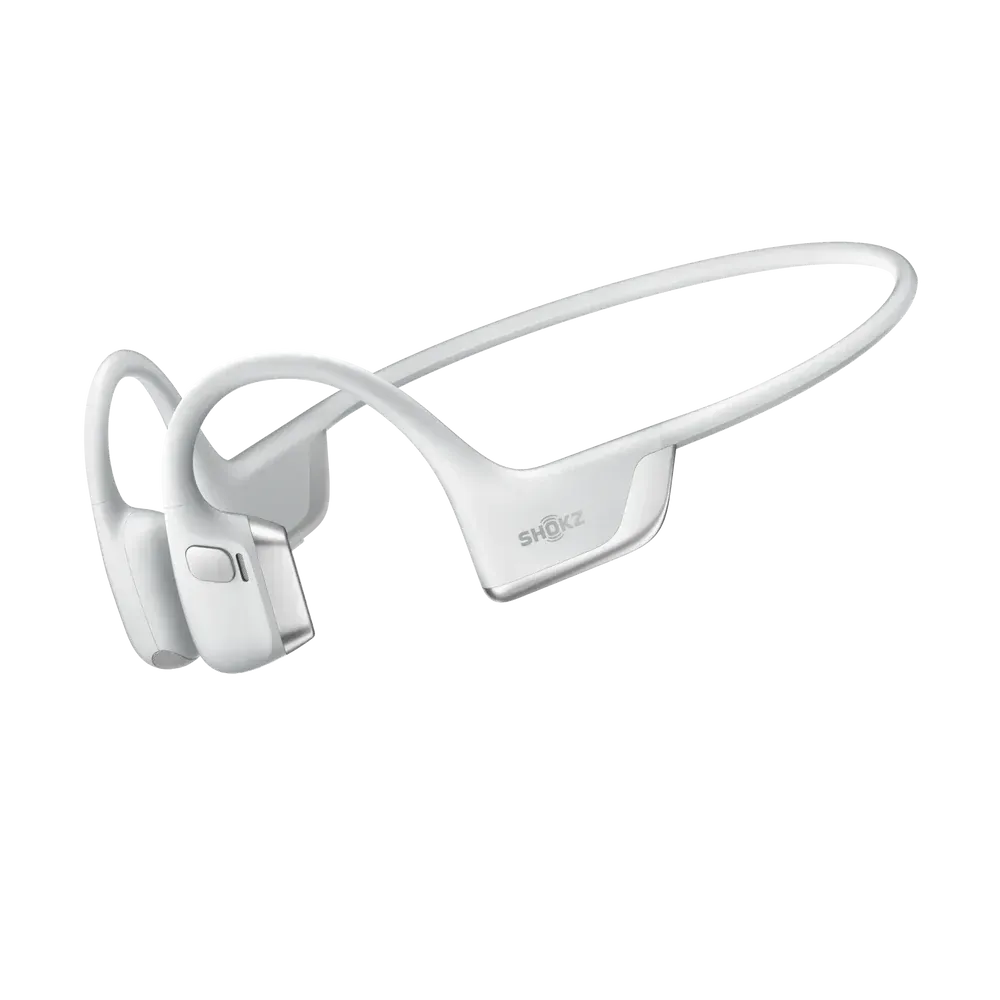
- You still hear traffic, trail, and your own footfalls — open-ear safety sealed buds can't match
- The new bass actuator finally gives bone conduction real low-end
- USB-C at last; a 5-minute charge buys roughly 2.5 hours
- 30 g and stable enough to forget on long efforts; sweat and rain shrug off (IP55)
- Still not in-ear fidelity — the bass is better, not basshead territory
- Leaks sound and tickles your temples at high volume
- IP55 is sweat and rain, not swimming
- Cheek vibration is divisive; some runners never love the feel
Road and trail runners who refuse to run deaf — anyone who wants music or podcasts without losing traffic, trail, and partner awareness.
You want isolating, high-fidelity sound for the treadmill or gym, or you swim — reach for sealed buds or the OpenSwim instead.
Most headphones are built to seal the world out — to drop a little soundproof booth over your skull so it's just you and the music and the gentle hum of your own thoughts. Which is wonderful on a plane and a genuinely bad idea on a trail, where the things you can't hear include mountain bikers, the runner trying to pass you, a truck on the road section, and, depending on your zip code, wildlife that would prefer you knew it was there.
The Shokz OpenRun Pro 2 takes the opposite approach. It doesn't go in your ears at all. It sits on your cheekbones, just in front of them, and pipes sound through the bone of your skull while leaving your ear canals completely open. You hear your playlist and you hear the world. The first time you run with them it feels slightly like a magic trick, and then about a mile later it just feels like the obviously correct way to listen to music while moving through a place that can hurt you.
This is the latest premium open-ear model from Shokz, the company that has more or less owned this category for years, and it's the one I reach for. Here's what the "2" actually buys you, and where it still asks you to compromise — because a gear review that pretends there's no compromise is just an ad with extra steps.
What the "2" actually changed. Bone conduction's historical weakness was bass — older models gave you music that sounded like it was playing in the next room, through a wall, in 2009. The Pro 2 adds a second, air-conduction driver dedicated to low end (Shokz calls the system DualPitch), and it genuinely helps. It also, finally, charges over USB-C. The previous generation used a proprietary little magnetic two-pin charger, the kind of thing engineered specifically to be lost in a hotel room four states from home. And the battery jumped to a real 12 hours. None of these are revolutions; together they fix the three things people actually complained about.
Comfort & fit
Comfort is the quiet headline, and it's the reason most people look at bone conduction in the first place. There's nothing jammed into your ear canal, so there's no slow ache that shows up around hour two of a long effort, no sweaty silicone tip working itself loose on a climb, no mid-run reach-up to reseat a bud that's about to make a break for it. At around 30 grams the whole thing basically disappears.
The part that matters on trails, though, is that it stays disappeared. The frame sits over your ears and against your cheekbones with a gentle clamp, and the band geometry is balanced enough that it doesn't bounce on descents or jackhammer around during faster running, and it doesn't slowly creep upward and off over the back half of a long run. You set it once and forget it, which is exactly what you want from the one piece of gear you can't adjust without breaking stride.
Sound
The DualPitch bass driver is the real upgrade. Bass is now present — not thumping, not chest-rattling, but there — and crucially without the old party trick where heavy low end set your cheekbones buzzing like a phone on a table. Mids are clear, and voices in particular come through clean, so podcasts and audiobooks sound better than the music does.
But manage your expectations, because physics hasn't changed. These still work by vibrating sound through your skull, not by sealing a driver against your eardrum, so they will never give you the depth and richness of even a decent set of in-ear buds. If you want to be wrapped in sound, this is the wrong tool. If you want a good soundtrack that doesn't wall you off from the world, it's the best-sounding version of that idea I've used.
Safety — the whole point
Situational awareness is the reason these earn a spot in the kit, not just a place in the drawer. Because your ears stay completely open, you hear the truck on the paved connector, the cyclist coming up behind you, the "on your left" from a faster runner, the rattle you really want to hear before you step on it — and, on a hard climb, your own labored breathing narrating your decline in real time. For pre-dawn and after-dark runs, when you're sharing roads and trailheads with traffic, this alone is the argument.
Battery, charging & controls
The 12-hour battery is enough for a very long day or a week of normal runs between charges, and the five-minute quick charge buys you about two and a half hours if you forgot to plug them in — which you will. USB-C means the cable you already own and have seventeen of will do the job.
The controls are physical buttons, and I'm glad they are. Two volume buttons sit beside the charging port (the plus button doubles as power), and a multifunction button on the left handles play, pause, and track-skipping. They're tactile enough to find and press with cold hands or gloves mid-run, which is more than I can say for the touch-gesture panels on a lot of earbuds, where a raindrop or an errant eyebrow can skip three songs. The build is the usual Shokz flexible titanium-cored frame — light, a little springy, and it doesn't feel like it'll snap if you stuff it in a vest pocket. IP55 means sweat and a light rain are no problem.
Where it gives ground
A gear review that won't tell you this is lying to you. The open-ear design that makes them great on the trail also means they leak — crank the volume and the person you pass gets a two-second sample of your music, which is humbling if your playlist is more honest than your public taste. The bass, improved as it is, still won't satisfy you in a quiet gym where sealed buds would wrap you in sound. The microphone is fine in still air and falls apart in wind — take a call running into a canyon headwind and the other person hears the canyon, not you. And IP55 means sweat and drizzle, not a downpour or a dropped-in-a-creek rescue; oddly, Shokz's own cheaper OpenRun is rated higher (IP67) there. At $179.95 they are not an impulse buy.
Who they're for
If you run trails or roads and you want to hear what's coming, the OpenRun Pro 2 is the easy recommendation and the one I actually reach for. If you mostly want music that seals you into your own world on a treadmill or a noisy commute, buy sealed earbuds and save yourself sixty bucks; this isn't the tool for that job. They reward the runner who'd rather stay aware and comfortable for hours than chase the last 20% of audio fidelity.
Verdict
The best running gear is the stuff that gets out of the way and lets you pay attention to where you are. The OpenRun Pro 2 is comfortable enough to forget, secure enough to ignore, and finally sounds good enough that you don't feel like you're settling. Its limits are real, but every one of them is baked into open-ear design itself, not into this particular execution of it — and this is the best execution going.
It lets the trail back in. On the trail, that's not a feature you tolerate — it's the whole point.
Specs at a glance
- Price: $179.95
- Type: Open-ear bone conduction + air-conduction bass driver (DualPitch)
- Battery: 12 hrs; 5-min quick charge ≈ 2.5 hrs
- Charging: USB-C
- Weight: ~30 g
- Controls: Physical buttons (volume + power by the port, multifunction on the left)
- Water resistance: IP55 (sweat + light rain; not immersion)